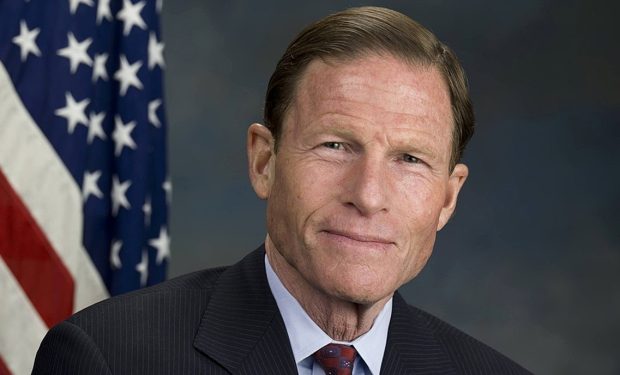
At a Senate Judiciary Committee hearing this week, U.S. Senator Richard Blumenthal (D-CT) asked three lawyers who have been nominated to district court judgeships by President Donald Trump, “Who won the popular vote in the 2020 election?”
Judge Megan Blair Benton, a Circuit Judge in Sixth Judicial Circuit of Platte County, Missouri, who is nominated to the United States District Court for the Western District of Missouri, was the first to reply, “In 2020, Joseph Biden was declared the victor.”
When asked again, “Who won the popular vote?”, Benton replied, “And in 2020, Joseph Biden was declared the winner of the election.”
Nominees Brian Charles Lea, who currently serves as the Deputy Associate Attorney General at the U.S. Department of Justice, and Justin R. Olson, an Indiana trial attorney, replied, “Same answer, Senator.” All three provided the same answer also when asked, “Who won the electoral college in the 2020 election.”
[Note: The man sitting with the judges (below) at the hearing is Daniel E. Burrows, Deputy Assistant to the President/Deputy Staff Secretary.]
PAINFUL to watch. There’s a clear Trump judicial nominee loyalty test.
— Senate Judiciary Democrats 🇺🇸 (@JudiciaryDems) December 17, 2025
They must forever deny, deny, deny that he lost the 2020 presidential election.
Fragile. pic.twitter.com/fp7iP2jOVa
When asked, “Did Donald Trump lose the 2020 election,” the three judges repeated their answers (“Joe Biden was certified as the winner”). When Blumenthal asked Benton, “You would agree that you’re not answering the question, correct?”, she replied, “I will repeat that Joseph Biden was certified.”
Blumenthal told the judges, “You can chose not to answer the question. But please, don’t insult my intelligence by asking me to accept that answer.”
When the Senate Judiciary Democrats shared the video of the exchange, it wrote: “PAINFUL to watch. There’s a clear Trump judicial nominee loyalty test. They must forever deny, deny, deny that he lost the 2020 presidential election. Fragile.”
Note: Benton authored a 2007 article titled In God We Trust: Messaging and Evangelical Political Behavior “about the importance of the evangelical Christian vote to the electorate, and particularly to the success of the Republican Party, hypothesizing that evangelical Christians are more likely to vote for ‘morals messaging.'”

